From AI Hype to Practical Value: eCommerce Takeaways from 2025 for 2026
If you asked us to describe eCommerce in 2025 in one sentence, we’d probably say: “We expected more big changes… but the shifts ended up happening in the background.”
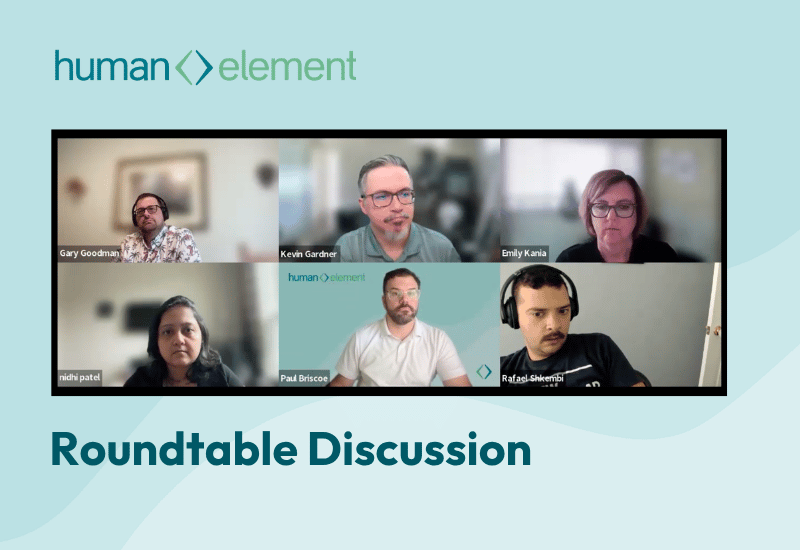
That was the vibe during our Q4 roundtable which gathered our team of experts from disciplines such as technology development, digital marketing, website strategy, project management, and more. We shared a mix of healthy skepticism and clarity about what actually changed in 2025 vs. what was just hype.

And we talked through the big questions: What surprised us? What flopped? What actually helped our clients? And what’s coming in 2026 that we should all be paying attention to?
Here’s the recap — conversational and candid, and giving you a peek into what we’ve been thinking about lately.
2025: The Year of “Huh, I Guess That Tracks”
When we asked what surprised people most about eCommerce this year, the first answer was basically: not much.
The industry kept marching in the same direction — SaaS and simplicity for most merchants, and a mix of innovation and self-inflicted obstacles from the bigger enterprise platforms.
Adobe, we need to talk.
Across both breakout groups, one theme came up quickly: Adobe Commerce keeps making moves that look innovative on the surface but are harder to access in practice. New AI features? Cool. But “cool” becomes “complicated” (and expensive) when every improvement comes with yet another license.
In a year when Shopify, Shopware, BigCommerce, and headless ecosystems kept lowering friction, Adobe raised it.
And speaking of lowered friction…
Smaller/Simpler Platforms Quietly Changed the Game
2025 was the year small storefronts started punching way above their weight. We saw something unexpected: AI search tools weren’t just surfacing Amazon or Walmart links — they were surfacing niche stores, specialty products, and well-written content from small merchants.
AI Visibility Became a Crucial Part of Findability
Human Element gained a surprising number of leads this year from people who said they found us through AI search behavior, not Google. Consumers were bouncing between two tabs — AI chat and Google — but the AI tab is what started the journey.
For smaller merchants (and honestly, for us), that’s a huge shift in visibility.
AI in 2025: The Hype Was Loud, the Results Whispered
Let’s be honest: AI underperformed this year. Not because it’s bad, but because the expectations were off the charts.
Everywhere you looked, someone was promising agentic commerce:
“Just tell your AI assistant to buy your mom a birthday gift, and poof! It arrives.”
In reality? We got: “Here’s a link to that blender. You still need to click checkout.” Which, to be fair, is probably for the best. We barely trust our friends to buy us the right thing — we’re not outsourcing that to a model just yet.
So what did AI actually do well?
A ton, actually — just not the flashy stuff.
Across our discussions, everyone kept coming back to the same places where AI made a real, measurable difference:
1. Product data cleanup — finally not a soul-destroying task
In 2025, AI became legitimately useful for untangling messy product data, filling gaps, spotting inconsistencies, and helping us prep recommendations or SEO insights faster than ever.
This directly changed what’s possible during sales and discovery. Instead of: “Give us a few weeks and we’ll audit this.”
We can now say: “Give us a few hours and we’ll show you what your data really looks like.”
That’s transformative.
2. Internal productivity skyrocketed
Developers used AI to generate scaffolding code, review code, or spin up quick utilities. Writers used it to accelerate content drafts. Analysts used it to spot patterns faster.
None of this replaced expertise, but it amplified it.
3. Content workflows stopped being bottlenecks
The example of our client, Roush Performance, came up multiple times. For years, everyone agreed they needed product-focused blog content tied to SEO and fitment data — and for years, it never got done.
This year, with AI? Totally realistic.
4. Customer expectations around personalization started shifting — fast
On the buyer side, AI-enabled platforms (Shopify, Walmart, Amazon, even eCommerce search tools) normalized predictive personalization. People now expect a site to remember what equipment they own, what parts they’ve bought, and what else they might need.
In B2B — where a lot of buyers are younger, digital-native, and not looking to talk to a rep on the phone — that’s a massive mindset shift.
The Sneaky Trends No One Saw Coming
Consumers are getting duped more and noticing it
A couple folks admitted they accidentally subscribed to products they thought they’d bought once. That tells us something: eCommerce patterns aren’t just advancing — they’re blurring ethical lines again.
That dovetailed with another breakout theme:
Ethical AI is nowhere near solved
Who sets the guardrails? Governments? Platforms? Agencies? Nobody knows yet.
We all agreed the EU will likely move faster than the U.S. and that whatever rules they pass may end up becoming de facto global standards.
The 2026 Predictions We Feel Confident About
After we split up our roundtable into two groups for about twenty minutes, we got back together and compared notes about a handful of predictions we actually believe:
1. AI will get more expensive — and less magical
Right now, AI is heavily subsidized. Most tools lose money every time we use them. That won’t last forever.
2026 will reward teams who adopt AI thoughtfully, not just because it’s shiny.
2. B2B self-service will go from “nice to have” to “don’t show up without it”
Younger buyers don’t want to call a rep. They want:
- personalized catalogs
- predictive replenishment
- purchase history that actually helps
- no phone calls unless something’s on fire
This shift mirrors the generational workforce shift happening inside manufacturers themselves. The expectations are changing on both sides.
3. The “golf course relationship” is becoming a “portal experience”
Old B2B relationship-building meant golf, steaks, handshakes, and regular phone calls.
New B2B relationship-building will look like:
“I sent you a link. Everything you need is already inside your personalized portal. You’re good to go.”
If you can make someone’s life easier instantly, that’s the new loyalty loop.
4. eCommerce platforms will keep shifting — and clients will rethink their entire tech stacks
With elevated licensing costs and uneven innovation across platforms, many clients are pausing to ask:
- “Do we still want to be on this platform?”
- “Is this tech stack holding us back?”
- “Should we switch to something simpler and reinvest in experience?”
2025 was the year of hesitation. 2026 may be the year of decisions.
5. Data quality becomes the new battleground
If AI is going to power:
- personalization
- search
- product recommendations
- competitive pricing
- content automation
…then the merchants with the cleanest product data will win. Everyone else will play catch-up.
So what’s sticking with us as we head into 2026?
A few standout reflections from the team:
- AI is already delivering value internally — before it fully matures for customers.
- The hype cycle is giving us better strategic conversations with clients.
- Simpler platforms are raising expectations that “anyone can manage their site” (even if they really still need us).
- Personalization isn’t futuristic anymore — it’s expected.
- We’re in the cultural shift phase of AI: learning to talk to our computers like people.
And maybe the most important takeaway:
AI won’t replace eCommerce teams — but eCommerce teams who use AI will outperform those who don’t.
Final Thought: 2025 Was the Setup. 2026 Is the Test.
We saw new tools, new expectations, new platform shifts, and a whole lot of unfulfilled hype.
But we also saw the groundwork being laid — in data, in personalization, in AI-assisted workflows — for a very different kind of eCommerce experience.
2026 is when we start to see whether the industry actually builds on that groundwork…or just keeps talking about it.
Either way, we’ll be here helping clients navigate it, shaping what “AI-assisted eCommerce” really looks like, and making sure none of us accidentally subscribe to mystery products again.