Why Planning Ahead Saves You More Than Just Money
Here’s a number that might surprise you: in the last few years, Andy, a project manager at Human Element, has had exactly one client proactively approach him about an eCommerce platform migration.
Just one.
“Most of the time when someone comes to us with a replatform, they also have a date,” Andy explains. “‘We need to be off of this platform by this date, because that’s when we renew and we don’t want to be on this platform anymore.'”
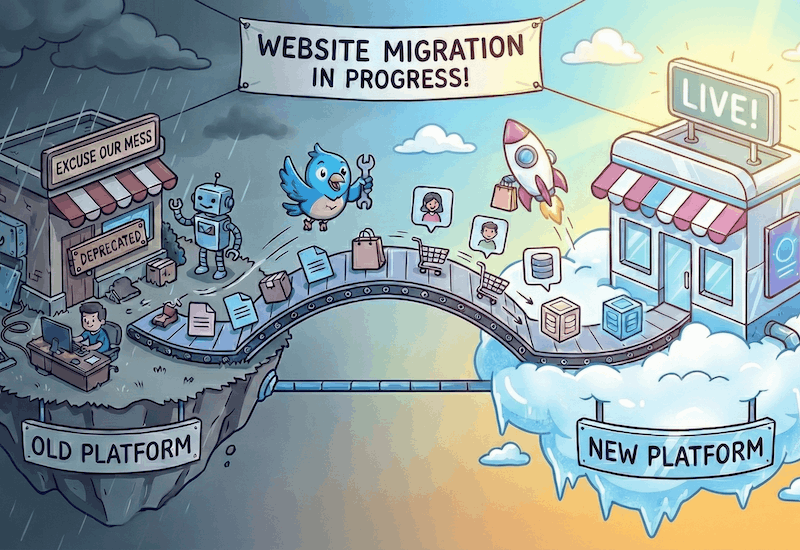
This isn’t unique to Human Element. Across the eCommerce industry, platform migration decisions are frequently reactive. Something breaks. License fees triple. A critical integration stops working. And suddenly, business leaders are scrambling to fix issues quickly… often missing the bigger picture of what a migration should accomplish.
Enterprise research from late 2025 found that 88% of larger organizations plan to modernize their commerce platforms within the next 12 months. Common triggers include lack of scalability, poor user experience, rising hidden costs, and technical challenges. But here’s what those numbers don’t tell you: reactive eCommerce platform migration addresses only a fraction of what you should actually be considering.
When you’re already behind the eight ball, as Andy puts it, those conversations become lost in an urgent timeline.
Why Sequencing Matters
Sabra, Human Element’s director of account management, recently navigated a conversation that perfectly illustrates the hidden risks of reactive planning.
A prospect approached the team saying they needed to replatform. Great! Then they paused: “Actually, let’s hold off. We want to redo a bunch of our data work first.”
Sabra’s response? “Don’t do that before you select a platform. Don’t do that before we figure out what migration tools are there.”
She uses a kitchen renovation analogy to explain the problem: “It’s like figuring out your cupboards and your kitchen before you know what the layout is. You might not need new cupboards. You might be able to use the cupboards that you have or you might be able to just change the fixtures.”
The point isn’t that data cleanup is unimportant—it’s that doing it prematurely almost guarantees you’ll have to do it again. Discovery work changes data requirements. Platform capabilities change what you need to migrate and how. Spending time and budget on cleanup before you know these variables is like buying furniture before you know your floor plan.
“They don’t know what they don’t know,” Sabra continues. “And having a partner like us who’s been through it multiple times… we understand the nuance of what you do first, what you need to consider.”
For most of Human Element’s clients – B2B manufacturers and distributors – this sequencing problem gets even more complex because platform migration isn’t just about the website.
The Tech Stack Challenge
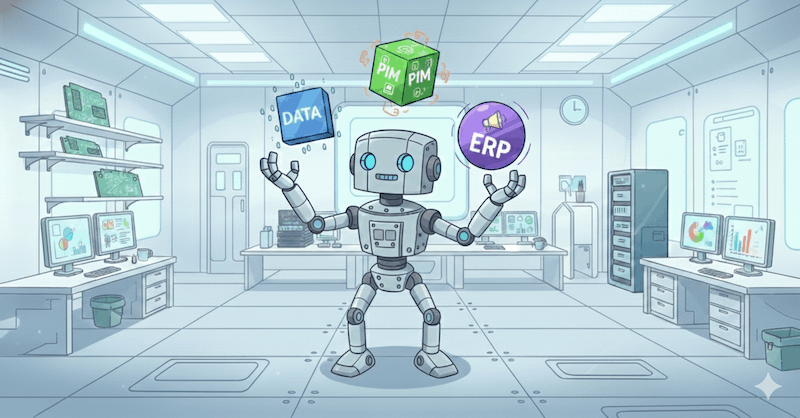
If you’re a B2B business, your eCommerce platform doesn’t exist in isolation.
“It’s not just the website that is typically at play, especially if you’re taking the B2B angle, which is the majority of our clients,” Sabra explains. “There are other systems at play that might need to change first or might need to change depending on the platform that you select.”
She points to a common scenario: ERPs reaching end of life.
“There are certain ERPs that are reaching end of life that a lot of manufacturers are on right now. You want to have the conversation about which eCommerce platform you’re going on at the same time as you’re having the conversation about changing your ERP. Even if you’re not changing your website for another two years, you want to select the right platform and ERP that complement each other.”
This is architectural thinking, not just website thinking. Some platforms include PIMs (Product Information Management systems). Others don’t. These aren’t trivial differences; they fundamentally change what other systems you need, how data flows between them, and what your total cost of ownership actually looks like.
But when you’re racing against a license renewal deadline, there’s rarely room for this kind of holistic systems planning. “When clients engage reactively and under time pressure,” Sabra notes, “there is rarely enough room to identify all stakeholders, understand downstream system impacts, or evaluate whether a chosen platform truly fits the business.”
The Total Cost of Ownership (TCO)
When Andy sits down with clients to discuss replatforming, he starts by reframing the entire conversation.
“A lot of times someone will ask about replatform or they’ll ask about what is coming up with say Magento fees or Shopify changes or Shopware, new kids on the block, things like that. And a lot of times we get caught in the minutiae of where we are now and where we want to be, instead of actually looking at what it is that we want to accomplish.”
Total cost of ownership is about far more than platform fees. Andy breaks it down:
“When we start talking about total cost of ownership, it really becomes a broader conversation around not just platform fees, but development, maintenance, support, internal resources, and long-term scalability.”
The License Fee Trap
Here’s a scenario we see often: Your license fees are tripling. The knee-jerk reaction is to jump to a cheaper platform. But maybe that’s not the best move, maybe the actual cost of replatforming would take several years to recoup. But until we actually look at that and until we dig into what your actual needs are, nobody really knows.
This is why Human Element advocates for what we call a “mini discovery.” Even before you commit to a full migration, you need to understand:
- Is your site actually meeting all of the needs that you have right now?
- If you built it three, four, five years ago, what changes have you made internally?
- Have you changed your preferred shipper?
- Have you changed software in the office?
- What innovations have you brought inside your business that are not reflected on your eCommerce site?
These questions matter because they reveal the hidden costs lurking in any platform decision.
Making TCO Manageable
Rather than overwhelming clients with one massive cost estimate, Andy breaks total cost of ownership into three phases:
- Initial build
- Ongoing maintenance
- Future growth
“When you see it laid out that way, it becomes less abstract and more actionable,” he says.
This approach also makes one critical truth impossible to ignore: there is no perfect platform.
“Every choice comes with tradeoffs,” Andy explains. “The goal is to choose the set of tradeoffs that aligns best with your business goals, not just your current pain points.”
How Your Team Impacts eCommerce Platform Migrations
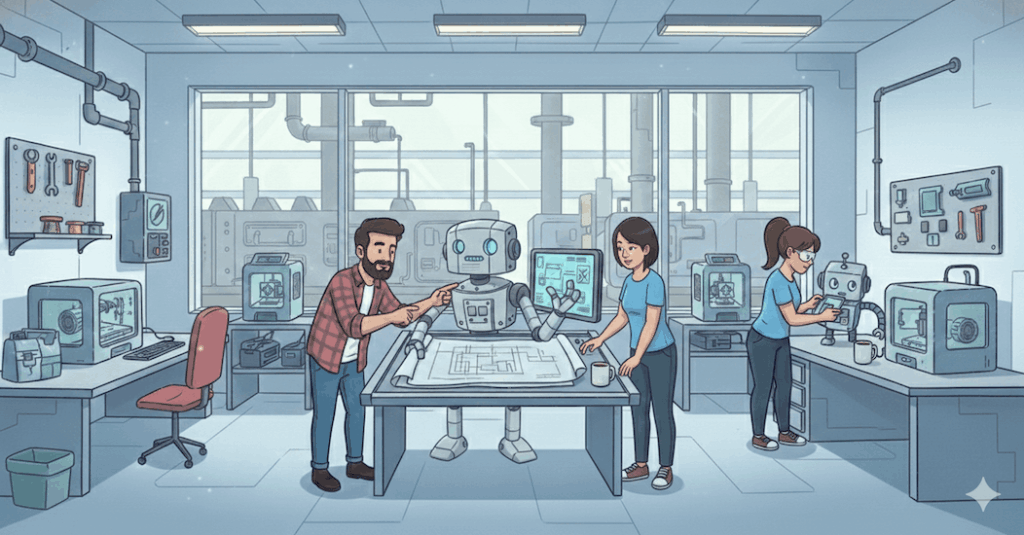
Sometimes, clients gravitate toward platforms that look affordable upfront, only to discover a problem months later: every minor update requires development time.
Andy adds: “Another huge piece is internal capability. Do you have the people to maintain this, or are you going to be reliant on an agency for every change?”
The truth is, it’s not always obvious upfront. A platform might seem budget-friendly during the sales process. But if every product update, every checkout adjustment needs a developer, those costs compound quickly.
Speaking of internal capacity, we want to make sure the eCommerce ecosystem works for all the people involved – not just customers, but the internal teams who live with these systems daily.
“When you are able to look at not only the needs of the consumer or the customer, but also the needs of the person in the back office or the person that’s shipping out orders every day, that’s when you see this incredible increase in not only your sales, but the happiness of your team.”
Think about it: Does your warehouse team hate the system? Do they have to make seven clicks to do something that should take two? Are they working around the platform instead of with it?
“These are all questions we don’t have the answer for, but you do. Your team does, and it’s just about someone getting those out of you to make the best decision.”
Strategy Over Short-Term Savings
When Andy talks to clients, he steers the conversation toward longevity.
“Are you choosing a platform because it’s cheap today, or because it supports where you want to be in three to five years?”
Yes, Human Element can replatform a site in two or three months. We’ve done it. But Andy is honest about what that timeline requires: “Obviously, we have to skinny down what’s happening.”
“It’s a much better process when we’re thinking long-term and more importantly thinking strategically of what would be perfect, and then let’s try to get as close to that as we can.”
What Gets Missed in a Rushed Migration
So what actually goes wrong when you’re forced into a short timeline?
We’ve seen it play out countless times. Sometimes it’s outside factors – a platform announces a fee increase at the worst possible moment. But more often, it’s internal gaps.
“The biggest things that are under control when this happens would be when people haven’t completely thought through what they actually want.”
He shares a recent example: a client was set to receive their Statement of Work. The day before delivery, three new requirements arrived. “‘Hey, by the way, here’s some things that we really need to confirm that are going to be covered.'”
Better late than never? Sure. But this is what happens when there isn’t time to talk to all stakeholders or think through the implications.
“That is the most common thing that happens because people haven’t thought through or they haven’t talked to all their stakeholders. And that’s also when you’re up against the time pressure. When that happens, things like this are far more likely to get missed.”
The cost isn’t just monetary – though that’s real too. There’s an efficiency gain and cost savings when you’re able to say: here’s everything. Let’s tackle it all and do it in the correct order. Because if you realize halfway through the project that you need to reopen a settled decision? That creates knock-on effects: different hosting requirements, different plugins, different modules. Problems compound.
The Evolving eCommerce Platform Landscape
Here’s where things get both exciting and overwhelming: the eCommerce platform market has exploded.
Sabra has watched this transformation firsthand. “The trend that we’re seeing is more and more eCommerce platforms being a part of the story. You know what used to be a couple big players and now there are industry-specific eCommerce platforms.”
Platform models are diversifying:
- SaaS
- On-premises
- Open source
- Headless
- B2B-specific platforms
- Industry-specific solutions
Many platforms are becoming more flexible, offering multiple deployment models rather than rigid approaches. It’s a richer landscape, but it’s also harder to navigate.
“Platform selection is increasingly complex,” Sabra observes. “Businesses are less equipped to navigate this alone. Agencies with broad experience can more quickly identify suitable options.”
But here’s the tension: The environment changes so quickly.
“You make a decision today about a platform, a new platform is going to come out next month or a new version of that is going to come out next month or a new version of the same platform is going to come out next quarter.”
So if you’re thinking two years ahead, does that mean your research becomes obsolete?
Not if you’re thinking about it correctly. The solution isn’t to avoid long-term planning, it’s to focus on business goals and outcomes rather than specific tools. Platforms can be re-evaluated closer to implementation. Strategic clarity allows you to adapt to new options without starting over.
eCommerce Migration Trends Today
What are we seeing here in 2026?
The eCommerce industry is deep into what analysts have dubbed “The Great Replatforming,” and while the concept itself isn’t new, the scale and confidence behind it certainly are. By late 2025, data showed a significant wave of merchants moving off decade-old platforms (like Magento) in favor of modern SaaS and composable solutions – most notably Shopify, which has solidified its position as the dominant migration destination. What’s notable isn’t that legacy platforms are losing ground, but how decisively businesses are leaving them behind. Merchants are now migrating hundreds of thousands of products, customers, and orders in a single replatforming effort, signaling that migration tooling, automation, and data integrity processes have matured enough to support enterprise-scale transitions without prohibitive risk.
Many migrations are being triggered not by a lack of features, but by escalating hidden costs: infrastructure management, custom development, security patching, performance tuning, and the ongoing burden of maintaining fragile integrations. Platforms (like legacy Magento or heavily customized WooCommerce builds) often appear flexible on paper, but their true cost compounds as traffic, catalogs, and operational complexity grow. This has driven many brands toward SaaS platforms like Shopify and BigCommerce, where hosting, security, uptime, and core functionality are bundled into predictable pricing – reducing operational risk and making costs easier to forecast.
How an Agency Partnership Helps
This might sound self-serving, but there’s a fundamental reason to bring in a partner like Human Element early: you shouldn’t be navigating these questions alone.
As Sabra puts it: “Clients are experts in their industry and business. Agencies are experts in eCommerce, platforms, migrations, and emerging tech.”
The value isn’t just in executing the migration. It’s in sequencing decisions correctly, asking questions you didn’t know to ask, and understanding the nuances of what to prioritize when. It’s being able to tap into a knowledge base that an agency like Human Element has with over 20 years of experience in eCommerce specific technologies.
Andy adds: “I honestly think that the biggest favor that we can do our clients is to ask the tough questions, push back on their assumptions, and always, always have them be aspirational. You might as well ask for everything and then let’s see how close we can get within budget.”
That aspirational thinking is what separates strategic migrations from reactive ones. When you’re not constrained by an immediate deadline, you can actually explore what “perfect” looks like, and then work backward to figure out how close you can get within constraints.
At Human Element, we’ve been helping clients navigate platform migrations since 2004. These are genuinely tricky, complex projects. The difference isn’t just technical expertise (though that matters). It’s pattern recognition across hundreds of migrations. It’s knowing which platforms excel for which use cases. It’s understanding the integration landscape. It’s having seen the mistakes other people made so you don’t have to make them yourself.
And critically, it’s offering discovery and strategy as a service integrated into the migration itself. You can get an assessment years ahead of planning the work – or even to determine if you should do it at all.
The Path Forward
Platform migration doesn’t have to be a crisis response. In fact, it shouldn’t be.
The most successful migrations we’ve seen at Human Element share a few characteristics:
- They start with business goals, not technical limitations. What do you want to accomplish? Where do you want to be in three to five years? Let those answers guide platform selection.
- They think in systems, not just websites. Your ERP matters. Your PIM matters. Your integrations matter. Plan for the whole ecosystem.
- They account for TCO. Platform fees are just the starting point. Factor in development, maintenance, support, internal resources, and long-term scalability.
- They involve the right stakeholders early. Your warehouse team. Your customer service team. Your IT department. The people who live with these systems every day.
- They accept that there’s no perfect platform. Every choice comes with tradeoffs. Choose the set of tradeoffs that aligns with your business goals, not just your current pain points.
- They leave room for discovery. Whether it’s a mini discovery before you commit to a full migration or a comprehensive audit, you need time to understand what you’re actually solving for.
Most importantly, they recognize that while technology changes quickly, solid strategic thinking holds up. Platform versions come and go. New vendors enter the market. But if you’ve done the work to understand your business requirements, operational needs, and growth trajectory, you can adapt to new options without starting from scratch.
Ready to Think Long-Term?
Whether your platform renewal is six months away or three years out, now is the time to start having strategic conversations. Our discovery process helps you understand your current state, future needs, and the platform landscape – so when you’re ready to migrate, you’re making informed decisions rather than reactive ones.
We’ve seen what happens when migrations are rushed. We’ve also seen what’s possible when they’re done right.
Let’s make sure yours is the latter – reach out and let’s start a conversation.