What Legitimate eCommerce Brands Need to Prove Now
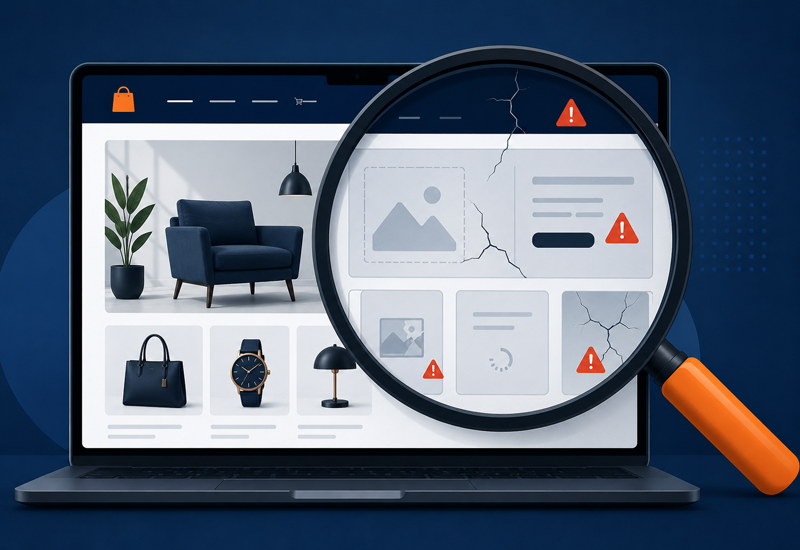
It used to be that you could visit an eCommerce store and tell pretty quickly if it was legit based on the quality of the store design and content. Those days are gone. With AI enabling scammers to set up sites more quickly using generated content and images, customers are more wary of shopping with new-to-them brands or stores they don’t already know to be legitimate.
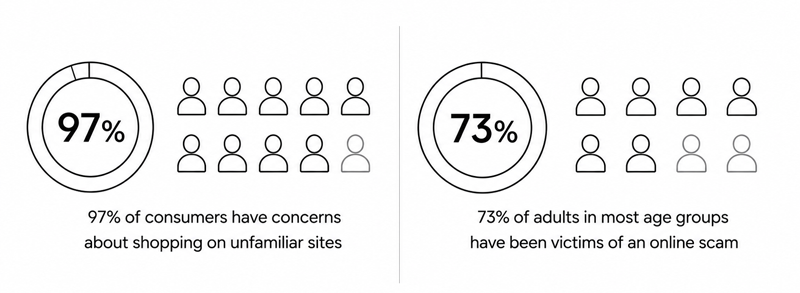
- 97% of consumers have concerns about shopping on unfamiliar sites
- Almost 3/4ths of adults in most age groups have been victims of an online scam
Eroding Consumer Trust
With fake storefronts comprising 41% of online fraud reports, it’s no wonder customers have learned quickly that they can no longer just believe what they see. In fact, there is a good chance that most people reading this article have personally experienced an online scam.
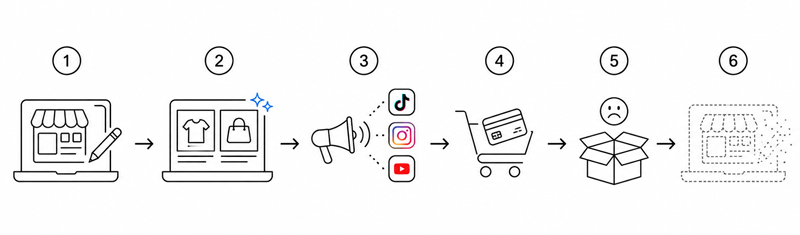
We’re all mostly familiar with the fake store scam by now. A fake brand site is spun up -> AI-generated images and content -> social ads (TikTok, Instagram, YouTube) -> customers buy products and either receive a fake low-quality product or nothing at all -> store and brand disappears.
But these scams are not limited to fake storefronts. They can also include other scams, such as knockoffs of legitimate brand products, sell one thing and ship something completely different, or sell products at a higher price and drop ship from what is known as a low-cost supplier (value scam).
How to Prove to Customers You’re the Real Deal
So what are you to do as a legitimate business trying to ensure your potential new customers that you are the real deal?
Unfortunately, there is no silver bullet to resolving the trust issue with customers, but there ARE steps you can take as a legitimate online seller to set yourself apart from the scammers.
- Start with the basics. Make sure your store “looks” legitimate. This means good design (with consistent branding online), clean copy without typos, proper SSL with encrypted pages (HTTPS), clear return/refund policy and shipping information and extensive product information (dimensions, features, specifications).
- Avoid unnecessary use of AI images, especially as it relates to products being sold. While AI image generation is convenient and fast, over-reliance on AI images can increase the “fake site” reading for customers. In particular, use real images when showing employees, customers or the products being sold.

- Utilize customer reviews when practical. Real reviews can go a long way to legitimizing your products and site. Include them on your site, but also via other review platforms such as Google, Bing, social media (Facebook, Reddit, etc.) Of course, fake reviews online are a thing, but legitimate reviews are still discernible by most of us, especially when there are a significant number of reviews, and they can be found in multiple places online. That includes keeping less than perfect reviews. Customers understand now that all 5-star reviews across all products on a site are a red flag for authenticity.
- Include business contact information, such as a customer service phone number, live chat, a responsive email address with clear business hours.
- Include a physical address and claim and verify that address. This means claiming your business address on Google and Bing, for example, with a link to your webstore.
- Include business profiles and pictures of staff on the site, especially under an About Us page. Customers can then confirm you are real with services like LinkedIn; this is especially helpful for newer web businesses that might not have as much history to draw on.
- Setup and utilize social media accounts and engage with members. Once your social media has some age and engagement over time, it will provide additional credibility to your business.
- Include trusted payment options. Offer Apple Pay, Google Pay, or Shopify Payment, to name a few. This helps customers feel more confident that your store is legitimate, since these services require some verification to set up. In addition, these services help customers feel more confident that they can get their money back in the case of a scam, and in some cases, such as with Apple Pay, it allows customers to use their credit card without exposing the number to the merchant, reducing the risk for customers.
- For more established businesses: Include a press release or news section on the site, where you can link to news publications about your business from reputable sites.
- Utilize trust badges that are relevant to your business, for example, BBB, Google Customer Reviews, TrustedSite, and Trustpilot badge. Also, consider adding industry specific badges when relevant, such as USDA Certified Organic, Fair Trade Certified, or B-Corp Certified, for example (include a link to the online public portals that display your certification when possible).
In the end, it is clear that businesses need to start paying attention again to trust signals in their online presence. Customers are increasingly skeptical of online business and will take a critical eye to sites before trusting their money or personal information with you. Take some or all of the above steps now to increase your trust signals and lean into what makes your brand authentic to avoid the scam site pitfalls facing online businesses today.